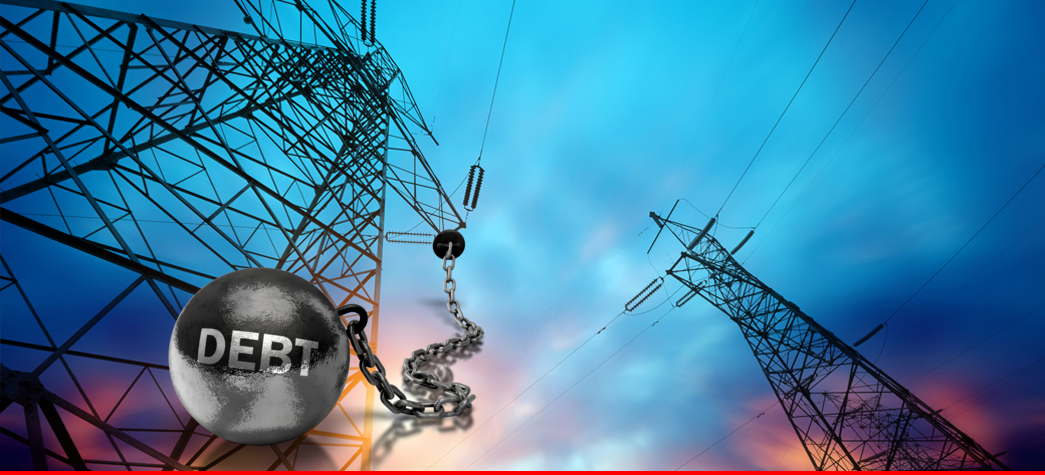
Why does Pakistan still pay so much for electricity? Learn how circular debt, power contracts and grid losses affect your bill, and what fixes could work.
Key Takeaways
- The IMF’s 7 October 2026 assessment calls for timely tariff changes alongside efficiency reform to stop new circular debt building up.
- Circular debt is an accumulating payment shortfall across the energy supply chain; it is not the same as the government’s total public debt.
- A higher electricity tariff can reduce a financing shortfall on paper without correcting theft, poor billing or unused generation costs.
- Households need transparent bill breakdowns and targeted assistance; businesses need predictable delivered electricity costs, not one-off relief announcements.
Electricity has become a test of whether Pakistan can make economic stabilisation visible in daily life. Pakistan energy crisis 2026 is about more than load-shedding. It includes costly power contracts, gaps between billed and collected revenue, unreliable distribution and the burden of financing losses that eventually appear in tariffs, subsidies or public borrowing.
The IMF’s October 2026 staff-level agreement calls for tariff adjustments and cost-cutting reforms to prevent fresh circular debt. But putting more of the cost onto paying consumers without improving service risks making the problem harder to solve. For a small textile unit in Faisalabad, the question is simple: can it predict next month’s power bill well enough to price an export order? For a salaried family in Karachi, it is whether electricity stays affordable through summer.
What is circular debt in Pakistan’s power sector?
It is the accumulation of unpaid financial obligations through the energy supply chain when revenue, subsidies and financing do not cover costs or arrive late. The sources include losses, weak collection, pricing gaps and contractual obligations. It is distinct from the whole country’s public debt and can change through financing adjustments as well as operating reform.
What creates Pakistan energy crisis 2026 and circular debt?
The term circular debt describes unpaid obligations that move through the electricity or gas supply chain. A distribution company may buy power but fail to collect enough money from customers to pay for it. It then owes the central power purchaser, which in turn owes generators or other suppliers. Late payments add financing costs and weaken incentives to maintain the system.
That is different from saying every private power producer receives an unjustified payment. Generators can be paid for the capacity they contracted to make available even when actual dispatch is low; terms, fuel exposure and risk allocation depend on each agreement. Efficient contracts require credible demand forecasts and a market that can use available supply. The contract issue cannot be solved by a single slogan.
The chain from lost units to a bigger bill
Imagine a distributor purchases electricity costing Rs10 billion. It bills customers for Rs9 billion after technical losses and unbilled consumption, then collects only Rs8 billion because some bills are unpaid. If there is no offsetting subsidy or capital injection, a Rs2 billion cash gap remains. This is a deliberately simplified teaching example, not a reported figure for a Pakistani utility.
The IMF’s 7 October 2026 programme assessment lists efficiency improvements, private involvement in distribution and wider competition among priorities. Those measures address the causes of the gap, while tariffs mainly affect how the gap is financed.
Why are electricity bills so high even when consumption falls?
Customers often expect their monthly bill to move in direct proportion to the number of units consumed. In reality, a final invoice can include energy charges, fixed or capacity-related components, applicable taxes, financing surcharges and adjustments tied to fuel or other costs. The exact tariff, categories and tax treatment must be checked against the current bill and regulator notices; they change over time.
Electricity producers and grid operators have significant costs before a household switches on its fan. Power stations need to recover approved fixed expenses, debt service and maintenance. Transmission and distribution infrastructure must remain available. When efficient customers install rooftop solar or reduce grid use, some fixed network costs may be spread across fewer units sold, unless the tariff framework evolves.
The FY2026–27 federal budget includes spending priorities and transfers that must compete with interest costs, education, healthcare and development needs. Broad untargeted power subsidies therefore have a fiscal cost even when households do not see that cost on the monthly invoice.
Important distinction: Less consumption can still lower the energy component of your bill. The question is how the remaining charges and subsequent tariff revisions interact. Compare like-for-like months and account for summer usage rather than relying on a single headline unit price.
What do IPP contracts, demand and grid losses each contribute?
Three separate problems often get rolled into one heated debate. Generation-contract design concerns who bears the risk when demand is below forecasts or fuel costs change. Distribution losses cover electricity lost through technical weaknesses or unrecorded use. Collection failures arise when bills are unpaid even though electricity was supplied. The policy remedies are different.
| Problem | Who bears the cost initially? | Measurable reform |
|---|---|---|
| Excess committed generation capacity | Purchaser and, ultimately, consumers or budget | Competitive procurement, better demand forecasts |
| High technical distribution losses | Distribution business | Network upgrades, feeder-level audits |
| Theft and inaccurate billing | Utility, paying customers, public budget | Verified meters, enforcement and appeals |
| Slow collection of legitimate invoices | Utility and its suppliers | Digital billing, enforceable payment plans |
| Gas losses and pricing gaps | Gas suppliers and customers | Leak reduction and transparent cost recovery |
Renegotiating contracts may help where lawful and economically justified, but it can also increase the country’s future financing cost if investors believe agreements are routinely ignored. The answer is disclosure, independent scrutiny, carefully designed competition and case-by-case negotiation rather than indiscriminate nonpayment.
The IMF reform priorities also cover gas-sector cost recovery and unaccounted-for gas. Electricity fixes alone will not repair the wider energy balance sheet.
How does the power crisis feed inflation and exports?
Energy influences prices through more than the household electricity bill. Flour mills, cold storage, textile dyeing, cement and urban transport all use power or fuel. When energy becomes unpredictable, a factory may add backup generation, hold more inventory or reject orders it cannot deliver on schedule.
For a business producing 10,000 garments a month, consider a hypothetical Rs500,000 rise in monthly power cost. Dividing by output adds Rs50 per garment, before exchange rates, wages, packing or freight change. An exporter cannot always raise its dollar selling price to cover this. The difference comes out of profit or employment.
The Pakistan Bureau of Statistics September 2026 inflation review put headline annual inflation at 10.3% and the housing, water, electricity, gas and fuel group at roughly 12.39% year on year. Such broad CPI categories are not a direct measure of an individual electricity bill, but they show why the cost of essential services matters for purchasing power.
The PBS July–September FY27 trade release reported merchandise exports of $8.445 billion and imports of $19.213 billion. Energy cost reform belongs in the broader export-competitiveness agenda, not only in household welfare discussions.
Would rooftop solar and new generation solve the problem?
Distributed solar can reduce a user’s purchases from the grid, particularly during daylight hours. It may also reduce imported fuel use. However, the economics depend on installation price, maintenance, financing, consumption profile and the rules under which exported electricity is credited. Electricity required after sunset still has to come from batteries, the grid or another source.
There is also a network financing issue. If better-off households leave much of the grid but rely on it as backup, the distribution system must still be operated. Poorer households that cannot afford solar should not carry an unlimited share of fixed costs by default. Regulation must address connection charges and protection for vulnerable consumers openly.
The World Bank’s Pakistan country partnership framework emphasises clean energy and resilience. Yet adding generation without repairing dispatch, contracts and distribution can worsen a capacity-cost problem. Prioritise projects by avoided cost to the system, not only installed megawatts.
Before investing, ask for a written quote showing expected annual output, projected self-consumption, battery assumptions, replacement costs and the regulatory treatment of power exported to the grid. Electricity economics can change over a system’s lifespan.
Which reforms would provide relief that lasts?
The first step is to publish utility-level performance data with comparable definitions: units purchased, units billed, units collected, technical losses, recoveries and the full accumulation or clearance of obligations. A claimed drop in circular debt can reflect refinancing or one-time transfers rather than a sustainable elimination of losses.
Second, governments need rules for targeted support. A lifeline tariff can protect low-income users more effectively than subsidising every consumed unit, including those used by large and wealthy consumers. The eligibility system needs a straightforward appeals route.
Third, invest where a verifiable rupee of savings is highest. Smart meters will not help much if customer disputes are never resolved; feeder repairs will not solve deliberate fraud without enforcement. Strong procurement oversight is central to both.
Fourth, create a credible path toward competitively procured electricity and fair access to the grid. The IMF’s October guidance explicitly links improved distribution, market competition and cost-recovery reforms. The target should be fewer unpaid obligations at a lower real cost, not permanently higher bills on an unchanged system.
What This Means for You
Households: Check the consumption units and tariff category on your bill before comparing costs with a neighbour. Separate electricity charges, taxes and adjustments. Keep meter readings and complaint references. Consider energy-efficient cooling and insulation before financing an expensive rooftop system.
SME owner: Model total delivered energy cost per product, including generator fuel and downtime. When quoting export prices, allow for realistic energy volatility instead of assuming the current tariff will persist for a year.
Solar buyer: Request a written payback calculation using your hourly use, not just a generic claim about reducing bills by a fixed percentage. Ask how future tariff and export-credit changes would affect returns.
Policymaker: Track cost per reliably delivered kilowatt-hour, arrears accumulation, average collection rates and service quality together. A lower headline circular-debt number without sustained cash collection is not sufficient evidence of reform.
What to Watch Next
- 26 October 2026: The State Bank monetary-policy decision and any revision to its inflation assessment; verify any schedule change with the SBP.
- Early November 2026, exact release date to be confirmed: Pakistan Bureau of Statistics October inflation and merchandise-trade releases.
- Late October–November 2026, date not yet confirmed: Any IMF Executive Board announcement on the October staff-level agreement; staff agreement is not Board approval.
- Throughout FY2026–27: Updated SBP monthly balance-of-payments and remittance statistics; compare cumulative results rather than one month alone.
Frequently Asked Questions
What is circular debt in Pakistan’s power sector?
It is the accumulation of unpaid financial obligations through the energy supply chain when revenue, subsidies and financing do not cover costs or arrive late. The sources include losses, weak collection, pricing gaps and contractual obligations. It is distinct from the whole country’s public debt and can change through financing adjustments as well as operating reform.
Do independent power producers cause all electricity tariff increases?
No. Power-purchase contracts are one component, including capacity and energy costs, but tariffs also reflect fuel, transmission, distribution losses, collection performance and taxes. Assess an individual contract on its terms rather than assuming all generators have identical payments or efficiency.
Why does the government increase electricity tariffs?
Tariff revisions may aim to cover approved costs and limit new arrears, while fuel adjustments can reflect changing input prices. In October 2026 the IMF supported timely adjustments alongside cost-cutting measures. Tariffs alone cannot cure theft or operational inefficiency.
Can solar panels protect families from expensive electricity?
Solar can reduce purchased daytime units, but savings depend on installation and finance costs, household consumption, maintenance and applicable compensation rules. Consumers should compare detailed quotes, include equipment replacement assumptions and check current grid rules before deciding.
What is the best long-term solution for Pakistan’s power sector?
Combine efficient procurement, transparent power contracts, stronger distribution management, accurate billing, collection enforcement and targeted household protection. Report progress using physical losses, recoveries and fresh arrears rather than one-off debt settlements. A credible market structure also needs consistent regulation.
If every tariff increase is presented as reform, households will eventually stop believing reform is possible. The measurable test is whether a power company can deliver reliable electricity, collect its legitimate bills and pay its suppliers without repeatedly asking taxpayers to cover the difference.