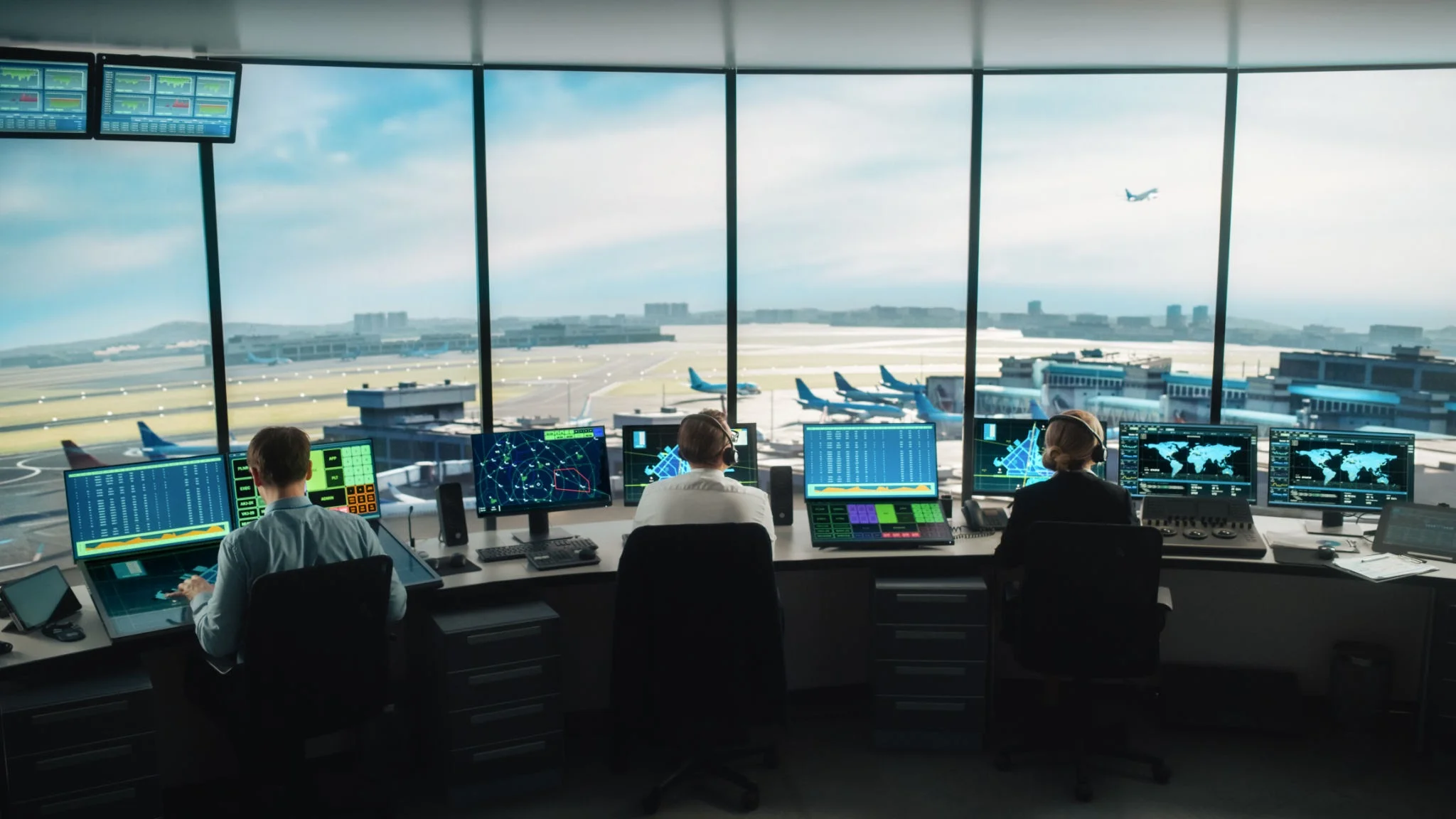
Key Takeaways:
- The Trigger: A November 13, 2026 nationwide FAA ground stop—only the second since 9/11—halted over 3,500 airborne flights and canceled more than 15,000 flights across two days after a copper-to-fiber upgrade overloaded legacy Cisco 600-series routers.
- The Core Flaw: Integrating modern fiber-optic and security software with 20-to-40-year-old telecommunications hardware creates “packet storms” that cascade across non-siloed regional hubs.
- The Fix & Risk: While Transportation Secretary Sean Duffy is requesting $50 billion to accelerate the Brand New Air Traffic Control System (BNATCS), federal auditors warn the FAA still lacks a master schedule and lifecycle budget to prevent repeat failures before the 2028 target.
For four hours and 21 minutes on Friday, November 13, 2026, the world’s busiest aviation network hit a digital wall. With more than 3,500 commercial aircraft in the sky and 1.5 million afternoon passengers waiting at gates, the Federal Aviation Administration (FAA) issued a rare nationwide ground stop—only the second in American history since September 11, 2001.
By Saturday evening, FlightAware data showed more than 15,000 flights canceled and over 7,500 delayed nationwide. The culprit was neither a foreign cyberattack nor a rogue artificial intelligence system. Instead, America’s National Airspace System (NAS) was brought to its knees by a routine infrastructure upgrade colliding with 25-year-old networking hardware.
What Caused the November 2026 FAA Ground Stop?
The November 13, 2026 FAA ground stop was caused by a cascading telecommunications failure during a copper-to-fiber-optic line upgrade at a remote FAA facility. According to Transportation Secretary Sean Duffy and federal investigators, a router installed during the upgrade flooded the network with over 1,000 connection requests every four to five seconds, overwhelming legacy Cisco 600-series routers manufactured between 2001 and 2006 and corrupting radar and voice feeds nationwide.
During Saturday briefings, officials detailed how a localized hardware mismatch rapidly escalated into a national emergency:
- The Packet Storm: As technicians transitioned a remote site from legacy copper wiring to high-speed fiber-optic lines, an improperly configured or faulty router began blasting out-of-sync data packets across the FAA’s private telecommunications network.
- Legacy Hardware Overload: Homeland Security Secretary Markwayne Mullin noted that new security patches and high-speed data loads overwhelmed the 2001–2006 era routers. Instead of dropping the excess traffic, the aging hardware transmitted corrupted signals, causing static on pilot-controller radio frequencies and flashing or blacked-out radar screens at Air Route Traffic Control Centers (ARTCCs) and TRACON facilities.
- Emergency Isolation: To guarantee zero mid-air collisions while data integrity was compromised, the FAA halted all departures at 3:54 p.m. ET—allowing only medical evacuations, life-saving cargo, and law enforcement flights to operate—until engineers isolated the remote node at 8:15 p.m. ET.
“Nickel and diming it together does not work. This is what happens when that takes place.” — Homeland Security Secretary Markwayne Mullin, on integrating modern upgrades into legacy FAA infrastructure.
Why Can One Router Failure Shut Down the Entire U.S. Airspace?
A single router failure can paralyze U.S. airspace because the FAA’s legacy telecommunications architecture relies on tightly coupled regional hubs rather than isolated, fault-tolerant cloud silos. Because radar data, flight plans, and analog voice channels share interconnected backbones, a localized data flood can propagate across multiple Air Route Traffic Control Centers before automated circuit breakers contain it.
Aviation and cybersecurity specialists point to three structural vulnerabilities inside the National Airspace System:
- Shared Analog Frequency Bottlenecks: As aviation attorney and pilot Edward Booth notes, pilots still communicate with controllers over shared VHF radio frequencies functioning much like party-line telephones—where 10 to 15 aircraft compete to speak on a single channel. When IP-to-analog voice switches desynchronize, controllers lose real-time vocal authority over congested sectors.
- The “Frankenstein” Integration Problem: Modernizing a live, 24/7 safety-critical network requires running modern fiber-optic lines alongside 40-year-old radar towers and pre-2000 software. As Acre Security CEO Kumar Sokka explains, unless software monitoring and network segmentation are deployed before swapping physical hardware, legacy nodes act as single points of failure.
- Unresolved Single-Point Risks: Under the FAA Reauthorization Act of 2024, Congress mandated an independent audit by the nonprofit MITRE Corporation to catalog pre-2000 systems vulnerable to single-point failures. While MITRE delivered its findings in August 2025, the FAA has yet to publicly release the full remediation roadmap.
FAA Modernization Progress: What Has Been Upgraded vs. What Remains?
Through late 2026, the FAA has replaced 69% of its legacy copper telecom lines and deployed digital surface-tracking systems at 143 towers under a $12.5 billion modernization push. However, core infrastructure—including 98% of aging flight radars, 71% of radio sites, and hundreds of floppy-disk-dependent display systems—remains unreplaced ahead of the agency’s December 2028 deadline.
| Modernization System | Legacy Technology | 2028 Target | Completed (As of Nov 2026) | Progress |
| Telecom Backbone | Copper wires patched with tape | 5,170+ fiber/wireless links | ~3,567 links replaced | 69% |
| Surface Awareness (SAI) | Visual tower spotting | 220 airport towers | 143 towers installed | 65% |
| IP Voice Switches | Analog patch boards | 450 digital switches | 226 switches installed | 50% |
| Digital Radio Sites | Static-prone analog radios | 1,581 radio sites | 457 sites converted | 29% |
| Electronic Flight Strips | Paper strips dropped in slots | 89 major towers | 26 towers transitioned | 29% |
| Enterprise Display Boards | 55-year-old floppy disk drives | 435 facilities | 5 pilot sites launched | ~1% |
| En-Route Radar Systems | ~40-year-old primary radars | 612 new radar systems | 15 radars deployed | 2% |
Sources: FAA Modern Skies Tracker & November 2026 Agency Briefings.
Where Does AI Fit Into the FAA’s Overhaul?
On November 10, 2026—just three days before the ground stop—the FAA expanded SMART (Strategic Management of Airspace, Routes, and Trajectories) across all 22 Air Route Traffic Control Centers. Backed by a 12-year, $875 million contract, SMART uses AI to predict weather bottlenecks and optimize flight trajectories. Secretary Duffy confirmed SMART played zero role in Friday’s hardware outage, though airline executives have privately cautioned that predictive AI tools must be carefully calibrated so they do not trigger unnecessary preemptive flight cancellations.
Can $50 Billion Prevent Another Outage Before Thanksgiving?
Even if Congress approves Transportation Secretary Sean Duffy’s new $50 billion modernization request, hardware upgrades cannot eliminate outage risks before the 2026 Thanksgiving rush. Replacing physical radars, retraining certified controllers, and isolating legacy network nodes require multi-year procurement cycles, leaving travelers vulnerable to localized disruptions in the near term.
Following the ground stop, Duffy urged lawmakers to pass the Modern Skies Act and boost aviation infrastructure funding from the administration’s earlier $30.1 billion proposal to $50 billion before year-end. Yet a September 2026 U.S. Government Accountability Office (GAO) report (GAO-26-107992) identified three non-financial roadblocks that money alone cannot immediately fix:
- Missing Master Schedule & Cost Baseline: The GAO found the FAA launched its Brand New Air Traffic Control System (BNATCS) initiative without a comprehensive lifecycle cost estimate or an integrated master schedule—increasing the risk of mid-transition outages just like Friday’s router failure.
- Certified Controller Shortages: Modernizing screens and flight strips requires pulling active air traffic controllers off the floor for simulator training at a time when facilities remain chronically understaffed.
- Vendor Accountability: The FAA is currently investigating whether telecommunications contractor L3Harris or equipment suppliers bear responsibility for the router configuration error that triggered the November 13 cascade.
What Travelers Should Do Ahead of the Thanksgiving Rush
With Airlines for America projecting a record 29 million passengers between November 20 and November 30, flyers can insulate themselves against residual FAA system instability:
- Book the First Flight of the Day: Morning departures (before 8:00 a.m. local time) rely on aircraft already parked overnight, insulating you from afternoon cascading delays if a regional TRACON experiences data instability.
- Favor Nonstop Hub-to-Hub Routes: During ground stops, airlines prioritize mainline aircraft between major hubs while regional feeder flights face the deepest cancellations.
- Know Your Refund Rights: Under federal aviation rules, if your flight is canceled or significantly delayed due to an airspace ground stop and you choose not to travel, airlines must provide a full cash refund—not just a travel voucher.